Positioning
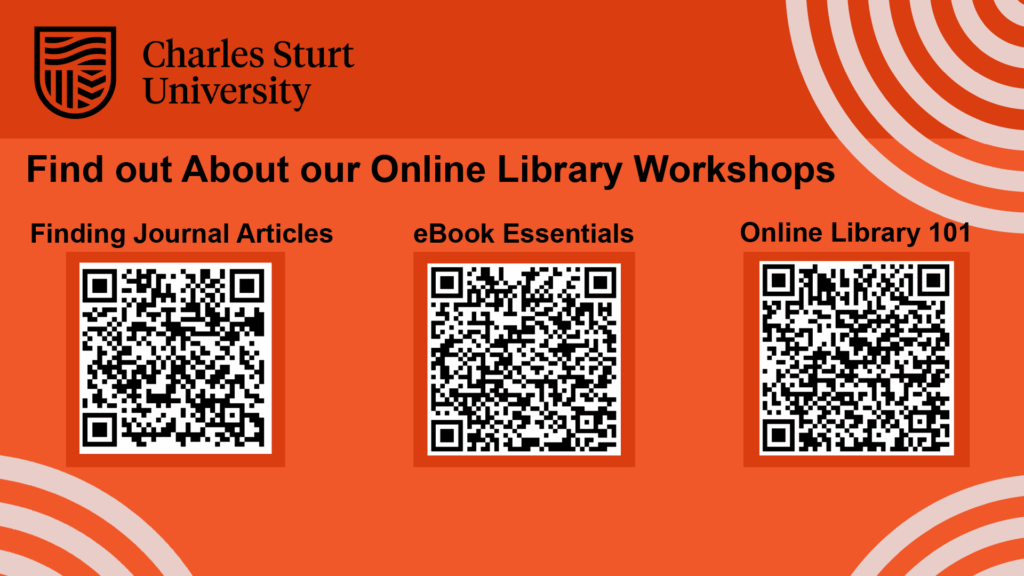
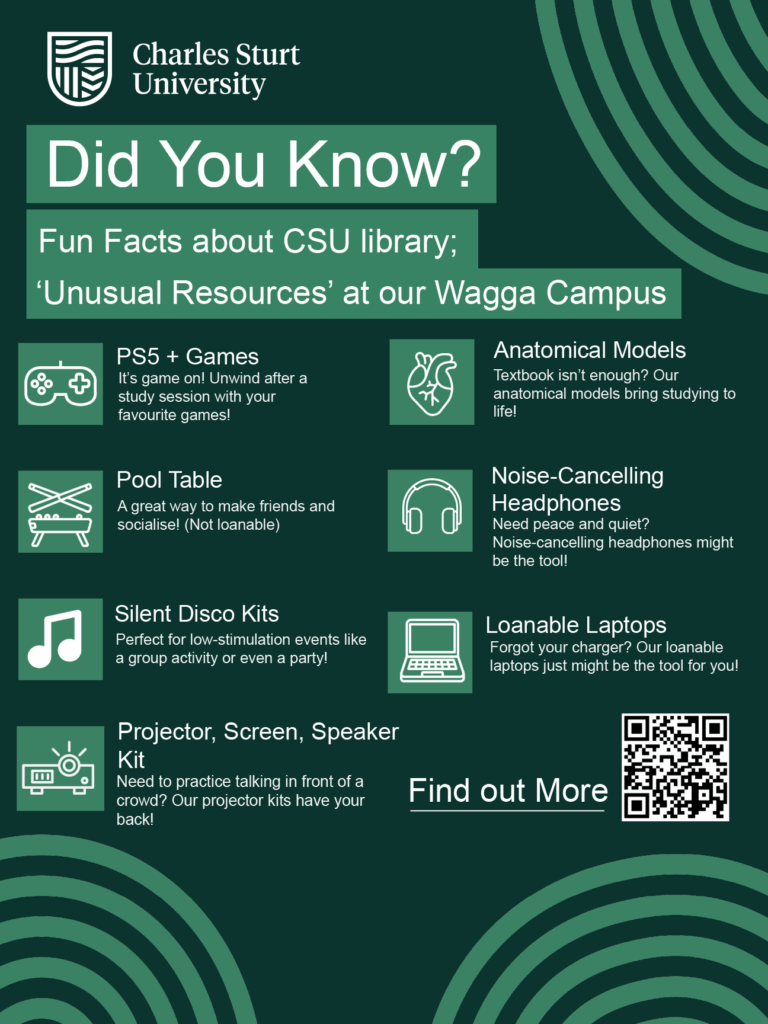
This first asset for Charles Sturt University is a physical poster, this poster outlines the ‘unusual resources’ aspect in the project brief, ensuring that students are informed of the resources that are available in that campus’s library. The second asset is a digital display of QR codes that take you to the library’s upcoming workshops. This asset enables on-campus students to quickly and easily access the workshops they need on the go.
The assets shown have been designed to specifically meet the CSU library service brief, in which we are to enable and encourage students to take advantage of the wider range of services that the library offers, promoting the use of our academic support services and equipment. Directly responding to the client brief, we were able to create assets that engage students and raise awareness in our CSU library services by using tones and design choices that resonate with our CSU students, e.g., short-form (dot point) content while also keeping the library’s CSU branding to feel familiar to students (Charles Sturt University Library, 2025).
The ‘fun facts’ poster for the library’s unusual resources has been specifically curated for the Wagga Wagga campus but can be further changed to suit the equipment available at other campuses, this poster has the potential to encourage students in an engaging and interesting way through the use of short-form content as seen in the poster, short and quippy sentences give a better understanding to the resources available at CSU library, we use this sort of content as it’s easily digestible to students and can be easily understood.
Bates., M, (2024) outlines the many academic advantages of short-form content in libraries, enabling libraries to create engaging content for students, and that ‘deep learning’ is not always necessary for student success. Having some forms of short content around the library will help engage students even when they are feeling unmotivated, and encourage students to indulge and retain the information rather than long content that may be found ‘boring’ and ‘unnecessary’ (Bates., M. 2024).
As for the digital display poster, it is a poster that must be easily changed as it will be displaying any upcoming online library workshops that students may want to attend.
This poster is supposed to be simple with only ~25 symbols present at once, making it difficult to put all the essential information in, this is why I have opted to use QR codes taking you to each workshop in the CSU library site.
“QR codes have generated interest for their use in education, presenting an opportunity to excite and engage learners in a way the teachers were unable to thus far” (Masih, E. A., 2022). These QR codes will enable students to quickly access the information without being overwhelmed with information on the screen, similar to short-form content. Studies show that a majority of younger people use QR codes more than older generations, up to half of gen Z (49%) and millennials (51%) use QR codes once a week, this is beneficial to digital displays as minimal information is required, and we are looking to target a young adult audience as this is the average age of students enrolled in CSU (TEAM LEWIS Research., 2024).
Overall, these designs have been curated for easy access and readability for students using a tone that would be familiar to them, instead of a traditional library tone. This familiarity combined with the use of QR codes and short-form content is both engaging and encourages students to branch out and explore the different services that the CSU library offers.
Media Asset#1
Content: Poster for Wagga campus.
Media Asset#2
Content: QR-Code Digital Display